Friday, April 29, 2011
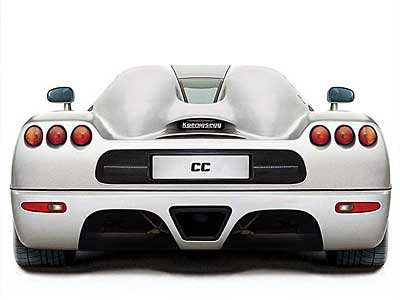
Koenigsegg Agera R
The Koenigsegg R was one of the stars of the Geneva show grabbing many headlines with its unusual high-speed roof-box that was proposed as an accessory. However, there was plenty of information missing about this Swedish hypercar. Up until now, that is, as the exotic carmaker came out with all the juicy details.
Starting with the performance numbers, the Agera R lives up to the company's reputation. The sprint from 0 to 100 km/h [62mph] comes after just 2.9 seconds, while 0 to 200 km/h [124mph] takes only 7.5 seconds. Even more impressively, the 0-200-0 km/h [0-124mph-0] is covered in a mere 12.7 seconds, partially thanks to its ventilated carbon ceramic brakes.
The 5.0-liter V8 engine develops 1,115 horsepower at 6,900 rpm when running on E85 ethanol. However, in markets where this fuel isn't available, the Agera R can run on 95 octane petrol (940HP), or 98 octane (1,050HP). Top speed is rated at over 420 km/h (261 mph).
Koenigsegg also revealed the equipment features for the Agera R that include among others an adaptive rear wing, hydraulic lifting system, satellite navigation system, G sensor (the car can make its passengers feel up to 1.6G of lateral g-force), leather carpets and a silver key.
Koenigsegg charges extra for options such as visible carbon body, front winglets, rear view camera, heated seats, ski box roof, skis, Inconel exhaust system and winter wheel package. The pricing has not yet been announced, but the Agera is expected to cost well beyond €1,000,000 ($1,410,000). Scroll down for the full specs.
Sunday, April 3, 2011
2011 Edo Koenigsegg CCR
Since the V8 engine is being force-fed by twin superchargers, the main focus was on the setup of the two Rotrex units. With assistance from the manufacturer the drive ratio was modified and the ECU was remapped to accommodate the hardware changes. The aim was to increase the power output while maintaining a broad torque curve over the whole rev range. With the new drive ratio the engine hits its torque peak earlier and puts out up to 891 horsepower, depending on the level of tune. In order to ensure long term reliability of the superchargers, the engine redline was lowered to 7,200 rpm.
The transmission with its notchy gear changes received an overhaul as well. The six speed gearbox was disassembled in its entirety and the plastic bushings were replaced with Uniball units. The final result: full boost pressure from just 3,700 rpm all the way up to 6,000 rpm, reassuringly durable brakes, finely tuned directional stability beyond 300 km/h (186 mph) and a top speed that was reduced slightly from 390 km/h (242 mph) for phenomenal and significantly improved acceleration and drivability.
Additional changes were made to the design of the vehicle's interior and exterior. The wheels for example underwent a beauty treatment and received a coat of charcoal paint. The updated front with auxiliary lights now resembles the later CCR models, and the Alcantara material that was used throughout the Koenigsegg's cabin provides a more luxurious feel. The redesigned center console now accommodates a new infotainment system including a reversing camera as well as a custom-made pouch for the immobilizer remote. For safety reasons a TPM system now informs the driver about tire pressures and temperatures. The display was integrated into the dashboard.
The bottom line: edo competition has succeeded in upgrading this extremely rare exotic with fine details without watering down its distinctly unique character. However, the most impressive aspect is still the intense and violent acceleration, which is virtually unparalleled, even in the realm of supercars.
Friday, March 18, 2011
2012 Koenigsegg Agera R
At the 2011 Geneva Motor Show Koenigsegg is presenting the brand new Koenigsegg Agera R - Quicker than lightning! The name Agera set the tone for the new project. Agera means "to take action" in Swedish. It is also short for the ancient Greek word Ageratos which means "ageless". These two are very suitable meanings, for the car building the future of Koenigsegg.
The 2012 Koenigsegg Agera is designed with the minimalistic "less is more" philosophy in mind. This philosophy means that the shape of the car has to be purely functional with no added features except those purely needed to meet regulation, added safety, ergonomics, practicality and aerodynamics. Koenigsegg believes that if this philosophy is followed, the car will also be beautiful as it is purely purposeful.
All in all the production version of the Koenigsegg Agera is created to take the Koenigsegg experience to the next level both on the road and the track, still maintaining the largest luggage space in the industry in combination with the unique Koenigsegg door system and detachable/stow-able hardtop. There are several differences between the pre-production car previously shown and the production versions. For example, the engine and gearbox configurations are different and some revolutionary interior, chassis and aerodynamic features adorn the production version of the Agera that has never been shown before.
The new car design 2012 Koenigsegg Sports Cars Agera R super speed racer car displayed in Geneva Motor Show 2011 is a very special customer, set to be delivered to its owner’s new Norwegian straight after the show closes. It is equipped with a special section with a Thule roof integrated carbon fiber ski-box containing two pairs of skis Koenigsegg.
At the 2011 Geneva Motor show, Koenigsegg presents the Koenigsegg winter package – the first lifestyle packages offered from Koenigsegg. The main element of this package is the exceptional Lightning Roof Box System. The Lightning Roof Box is developed together with the Swedish rack and roof box manufacturer Thule. The high performance lightweight box is made completely from carbon fibre and has been through several iterations of CFD simulation to ensure it is safe up to 300 km/h, making it the fastest roof box in the world.
The supercar 2012 Koenigsegg Sports Cars Agera R is built with a monocoque carbon to provide maximum rigidity and light weight; It is so structurally sound that does not require an annex roof, allowing the roof as a removable Panel which can be stored away. Koenigsegg hasn’t published performance numbers for R Agera yet, but from tires rated at 260 km/h and horse-like body structure and range as the poison Hennessey, its 0-60 mph time to be approximately 2.5 seconds and a top speed around 250 km/h on a double clutch 7.
2012 Koenigsegg Sports Cars Agera R is powered by 5.0L twin-turbo V8 making a neck snapping 1,115-hp and a maximum torque of 885 lb-ft on E85 fuel. Koenigsegg has its own engine lab, with simulation programs, rapid prototyping machines, engine and chassis dynamometers, and a 1.7 km test track adjacent the factory enabling Koenigsegg to take the cars to 0-320-0 km/h at any time. Furthermore, a 25 minute drive away from the Koenigsegg Factory there is Knutstorp Racetrack, which is described by many as a miniature Nordschleife.
The engine 2012 Koenigsegg Sports Cars Agera R are mated to a 7-speed dual-clutch gear case and we’re pretty aye that cuts the 0 to 62 miles per hour time belt down to something that’s very impressive. Here Koenigsegg can put the engine and car through serious testing and make sure they work in perfect harmony. This gives Koenigsegg unique possibilities to develop technologies normally exclusive to much larger companies.
These are extraordinary numbers considering the size and reliability of the engine without forsaking drivability or flexibility. This is truly downsizing, without drawbacks. These characteristics make it one of the most flexible and easy to use hypercar engines in the world.
The 2012 Koenigsegg Sports Cars Agera R is proportionate, compact and muscular. Its timeless, efficient and distinctive shape is truly a testament to time. The original shape and concept of the Koenigsegg CC, created 15 years ago, is still valid, fresh and highly competitive today. The Agera manage to stay true to the original philosophy, shape and size of the original CC. At the same time, it looks, feels and performs like something belonging to the future.
The price of the optional 'R' package, on top of a normal $1,400,000 Agera, is $211,000 at current exchange rates, but that looks like something of a bargain compared to the $270,000 Koenigsegg charges for creating a bare carbon car.
Tuesday, March 1, 2011
2012 New Koenigsegg Agera R


New Koenigsegg Agera R, the car is like a scary monster. use a V8 engine with twin-turbo 5000 cc capacity of the hidden body capable of making this car spewing power up to 1100 bhp with peak torque of 885 lb-ft reach.
Koenigsegg Agera R Design body was made in such a way that this car aerodynamics become increasingly high. Koenigsegg Agera R foot rim seconded Vortex Generating Rim (VGR) with high performance tires are then made Koenigsegg Agera R look became more and more sporty.
Saturday, August 14, 2010
Koenigsegg CCX (2006)
Sunday, June 28, 2009
Saturday, March 3, 2007
Koenigsegg CCGT race car & 1018Hp Bio-Fuel Powered CCXR to premier in Geneva
Koenigsegg’s going to present two new models next week at the Geneva Show. Starting off with the homologated GT1 racer, the CCGT, in order to comply with the ACO and FIA GT1 regulations the Swedish supercar maker removed the superchargers from the stock 806Hp 4.7 V8 and bored it out to 5.0-liters. As for the CCXR., looks like the “environmental friendliness” craze hit those Swedish fellas. The CCXR is equipped with an updated version of the 806Hp 4.7 V8 engine of the CCX that runs on E85 (bio-fuel). Funny enough, due to the fact that the biofuel has higher octane and cooling characteristics, the power has gone up to 1018 hp at 7200 rpm and the torque to 1060 nm at 6100 rpm! Via: Jalopnik-Continued: Click “Read More…” below to see the official press release & more pics


Koenigsegg Press Release
Koenigsegg has created a new race car - the CCGT, based on the production CC-model range. The CCGT complies with the ACO and FIA GT1 regulations. The CCGT engine is based on the Koenigsegg CCX production engine with the superchargers removed but enlarged to 5.0 litre.
The reliability of the race engine is expected be exceptional as it is based on the proven strength and durability of the signifi cantly more powerful road car engine. The minimum weight allowed for a GTI race car is 1,100 kg and most manufacturers struggle to meet this target, having to undergo massive weight saving programs.
Due to the fact the Koenigsegg CC cars are very light and stiff in road confi guration, the racing CCGT weighs in at just under an astounding 1,000 kg. This gives the possibility to place 100 kg of ballast freely within the car structure, still following the set rules. This should give Koenigsegg an interesting advantage over the competition.
The CCGT has very short overhangs, which could be seen as an issue when it comes to generating enough downforce. However, by further developing the clever and "slippery" design concept of the CC range, Koenigsegg believes they have created a unique package incorporating a surprising amount of down-force combined with a very compact package and optimal weight distribution. Since the CCGT has a short overall length and low overall height, whilst still maintaining adequate track width and length, it is thereby gifted with superior agility compared to most of the competition, which should be evident in future heated racing combats.
The Koenigsegg CCGT development team, headed by Dag Bölenius, has done a superb job by refining the CC into the CCGT. The race engine is being developed in-house in parallel with the production units by Koenigsegg engineers, supported by Anders Hoglund from Cargine engineering and JP Motorsport.
CCXR: Flower Power
When thinking about supercars, one of the last things that spring to mind are their environmental friendliness. Even though the very low and exclusive production volume of Koenigsegg can hardly be considered to have a measurable impact on the Co2 problem that global society is facing, it is an impressive statement that even a small and extreme company like Koenigsegg can afford to develop environmentally focussed solutions.
By following conscientious and forward thinking strategies, Koenigsegg has managed to create the Bio Fuel Powered CCXR - environmentally friendly 1200 with even more spectacular performance than the standard CCX.
These two almost confl icting results are made possible due to the simple fact that the ethanol in biofuel has the positive side effect of cooling the combustion chambers, as well as a higher octane value, well over 100 RON, which gives the high power. Due to the fact that the biofuel has higher octane and cooling characteristics, the power has gone up to 1018 hp at 7200 rpm and the torque to 1060 nm at 6100 rpm.
It is natural to expect a substantial gain in power when optimizing the engine for E85(biofuel) instead of Petrol. Still the actual gain obtained even surprised the enthusiastic engineers at Koenigsegg.
Following the long term strategy of Koenigsegg, all previous CCXs will have the possibility to be converted by the factory to accept the biofuel option and reap the performance and environmental benefi ts of this wonderful and eco friendly fuel.
The CCXR Biofuel upgrade has been developed in-house on the factory's engine dyno by the skilled technicians at Koenigsegg, led by Christian Koenigsegg, Marco Garver and Anders Hoglund from the Koenigsegg partner company Cargine Engineering. Curiously enough the CCXR is the first homologated car currently in production to reach over 1000 BHP.
Technorati: Koenigsegg+CCGT, FIA, Bio-Fuel, Koenigsegg+CCXR, Geneva+Motor+Show, auto+news, car+news, automobile, cars, automotive, vehicles, Carscoop, blogs, 2007, pictures, images